
The shortage that wouldn’t quit
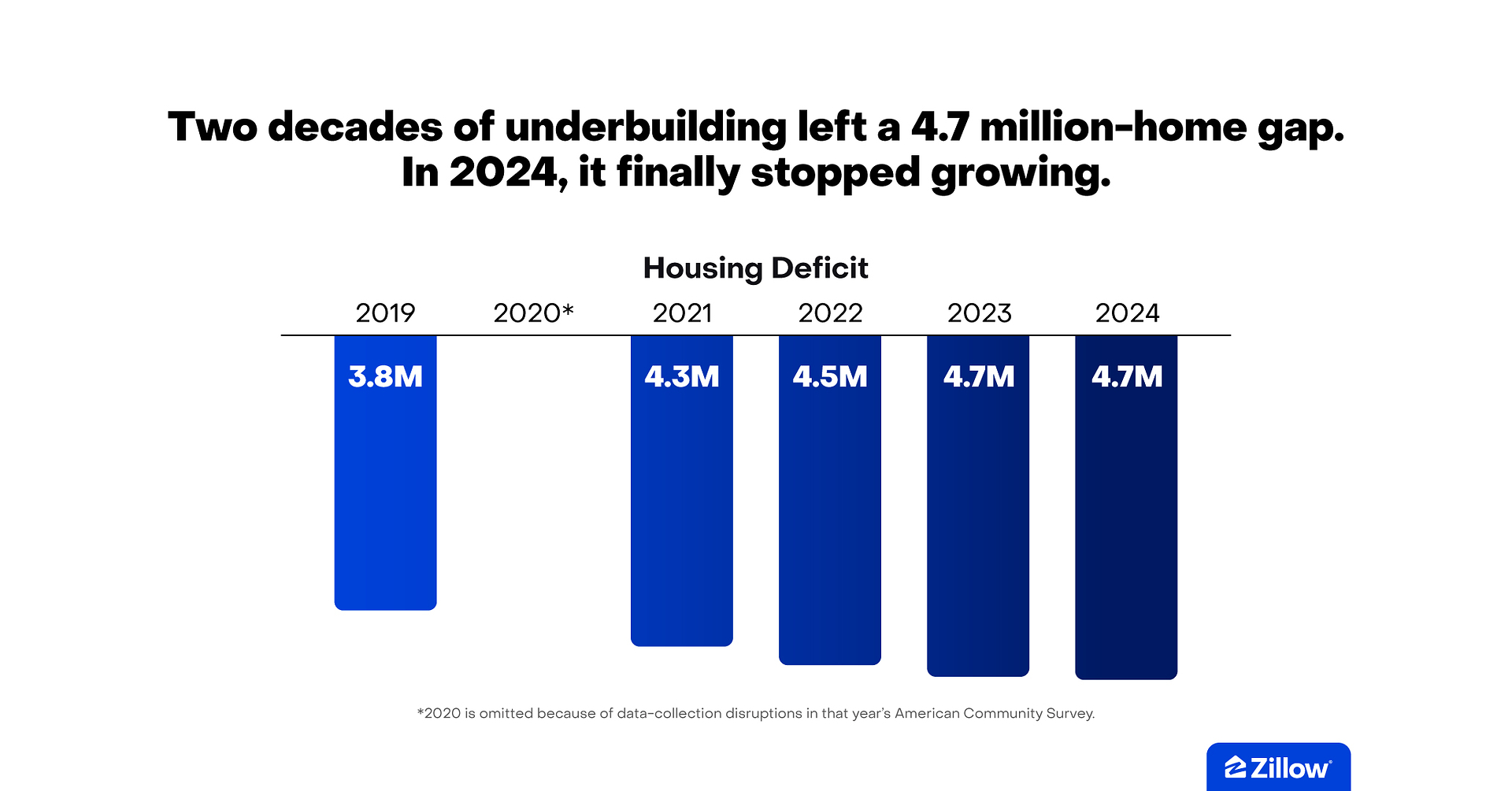
America’s housing gap has been the economy’s favorite bad houseguest for years. But Zillow’s latest research says 2024 brought a rare plot twist: the deficit barely budged, rising by just 43,000 homes after much bigger jumps in 2022 and 2023.
That leaves the U.S. still short about 4.7 million homes — which is not exactly a “problem solved” headline, more like “the leak slowed, but the basement is still wet.”
Why this matters for your wallet
The big reason? Construction finally showed up to work. Multifamily building hit a 50-year high, helping keep the gap from widening as fast as it had been.
For investors, that can matter in a few ways:
- More supply can take some pressure off rents and home prices over time.
- Builders and materials names may benefit if the construction boom keeps running.
- Rent-sensitive consumer spending could get a tiny breather if affordability improves.
Still a long way from normal
Here’s the catch: a smaller increase is not the same as a fix. A 4.7 million-unit deficit still screams structural shortage, which means housing affordability stays stubbornly ugly.
So yes, the trend is moving in the right direction. But if you were hoping for a clean victory lap, not quite. Big picture: the market may be cooling at the margins, but America’s housing shortage is still very much on the balance sheet.