 ABBV
ABBV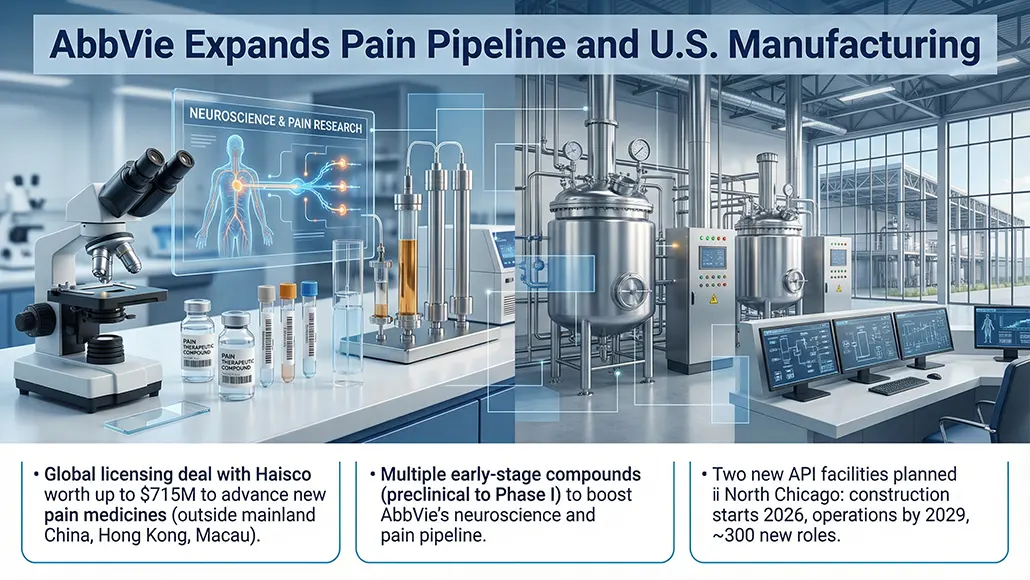
Another way to keep the growth machine fed
AbbVie isn’t exactly acting like a company sitting on its hands. The drugmaker has struck a $745 million deal with China’s Haisco to expand its pain-drug pipeline, adding another program to the mix as it keeps hunting for the next revenue engine.
For investors, the basic math is pretty simple: more pipeline optionality is usually good, especially when a pharma giant is trying to keep future sales from getting too dependent on any one blockbuster. Think of it like adding more lanes to a highway before rush hour turns into a full-blown parking lot.
Why this matters
Pain drugs can be a big business, but they’re also a tricky one. The upside is obvious: large unmet demand and plenty of room for a winner to get sticky with doctors and patients. The downside is equally familiar: long development timelines, regulatory hurdles, and the ever-present chance that promising science decides to be painfully uncooperative.
Still, this kind of deal can matter a lot for AbbVie’s long-term story:
- it broadens the pipeline without requiring a giant acquisition
- it gives the company another swing at a high-value therapeutic area
- it helps reassure investors that AbbVie is still building beyond today’s revenue base
Big picture
This isn’t the kind of headline that sends traders sprinting for the exits or the buy button in the first five minutes. But it does reinforce the same theme AbbVie keeps selling Wall Street: the company is trying to stay relevant in a post-patent-expiry world by stacking up new growth options before the old ones age out. And honestly, that’s exactly the sort of boring-but-important strategy investors should pay attention to.