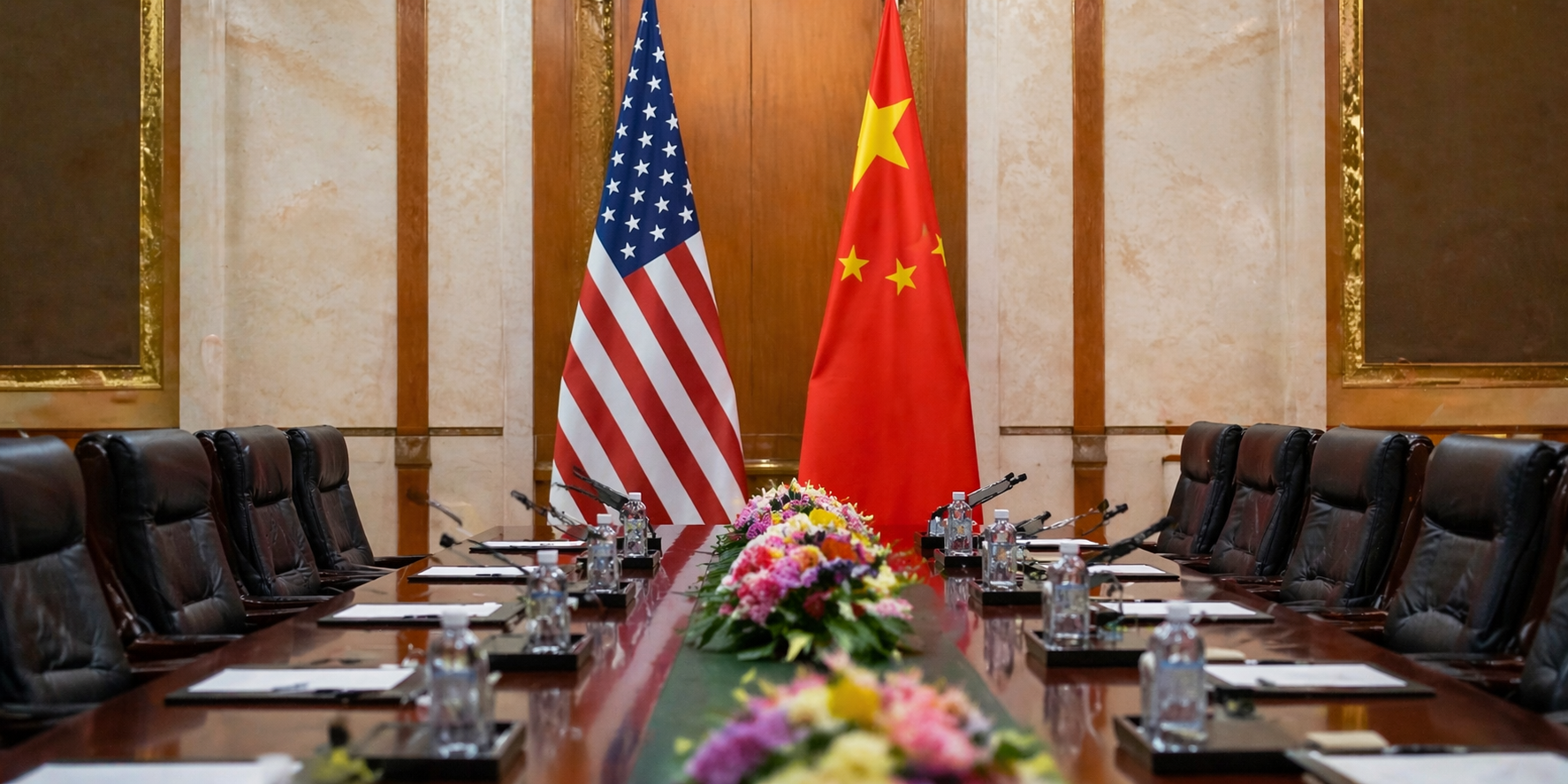
The gloves are coming off
The White House has accused Chinese actors of stealing intellectual property from American AI labs at what it called “industrial scale.” Translation: this isn’t a random swipe at a startup’s lunch money — it’s a broader warning that the U.S. thinks its crown-jewel AI work is getting picked apart overseas.
Why investors should care
If Washington believes leading-edge AI systems are being systematically copied or extracted, you should expect the policy response to get less polite and more expensive. That can mean tighter export controls, more scrutiny on cross-border research, and a fresh round of headaches for companies that sell chips, cloud compute, or AI tools into global markets.
Same old geopolitical movie, new special effects
The memo, from Michael Kratsios at the White House Office of Science and Technology Policy, frames AI as the next high-stakes battleground in the U.S.-China rivalry. And when the world’s two biggest economies start treating a technology like strategic territory, markets usually get treated to the financial equivalent of turbulence in seat 12A.
Big picture
This is less about one company and more about the rules of the road for the entire AI stack. If the U.S. decides the IP risk is real and widespread, the knock-on effect could be stricter controls, slower cross-border collaboration, and a little more geopolitical anxiety baked into AI valuations.